

 It’s science fiction in action. As its passengers relax in blissful hands-off ease their robotic Google car, relying on a matrix of sensors and GPS controls, jockeys them through the slice and dice of high impact freeway driving, and delivers them home without so much as a bent fender. To skeptics this sounds a little too much like living in a movie: fantastic, futuristic and disastrously unworkable. To meet the concerns of naysayers, Google turned the key on a prolonged lobbying campaign in the freeway state of California to get approval to road test its new vehicles. This week, with the signing into law of the “Google Car” bill by Governor Jerry Brown, that lobbying strategy proved itself to be as radar savvy, laser sharp and sensor smooth as the performance of any robotic ride.
Driverless car development is no longer the fantasy mind freak of a tech geek blogger. Audi, BMW, Ford, General Motors, Volkswagen and Volvo are testing or developing these vehicles. Google is road testing Toyotas and an Audi. To industry proponents of automated driving, robotic cars succeed not only because they remove human error from the road, the number one source of all accidents, but because their streamlined operation minimizes traffic chaos and improves fuel efficiency.
Science is one thing. Selling politicians and regulators that the future is now raises its own monumental speed bumps. As one of California’s marquee brands, Google has been a lobbying presence in Sacramento for years. The company enlarged its footprint during the 2008 gubernatorial election, when it dropped $25,900 into the campaign coffers of both Jerry Brown and Meg Whitman.
Brown has proved a solid ally of Google, and since his inauguration the company has built up its presence in Sacramento. To promote its robotic car the company secured the services of Jonathan Ross, a lobbyist with the firm of KP Public Affairs. Ross was paid $140,000 and doggedly lobbied the State House, the California Highway Patrol and the Department of Motor Vehicles. In addition between 2009-10 the company contributed $64,000 to more than thirty legislators in the Senate and Assembly.
Google backed this political campaign with a PR operation that pushed back against the public scare factor over unguided tons of metal zipping around California’s towns. In one memorable Google ad an elderly blind man is robotically driven to the take-out window of fast food restaurant for an order of tacos.
There are critics. The Alliance of Automobile Manufacturers has raised common sense concerns over safety and liability issues. The public interest advocates at Consumer Watchdog have also challenged approval for road testing of the cars, citing worries about the intrusiveness of Google into the privacy of drivers.
When the “Google Car” bill finally came up for a vote in Sacramento it blew through both chambers of the state house, 37-0 in the Senate and 74-2 in the House, landslide margins that surprised even the bill’s most fervent backers. This Tuesday Governor Brown signed off on the legislation in a ceremony at Google headquarters, which requires the California DMV to adopt state-wide safety and performance standards for robotic vehicles by January 1, 2015.
Google has won similar approval for testing in Nevada and Florida, and continues to lobby nationally for the driverless car, spending almost 9 million promoting this and other matters at the Federal level in the first months of 2012.
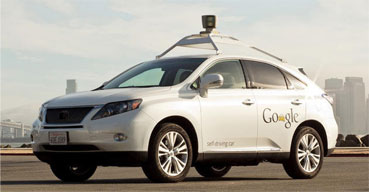
But for some politicians, however right the science, there may persist issues of design. Crowned with an obtrusive array of sensors across its roofline, the Google car as it currently rolls leaves no space for a dog carrier.
Driverless car development is no longer the fantasy mind freak of a tech geek blogger. Audi, BMW, Ford, General Motors, Volkswagen and Volvo are testing or developing these vehicles. Google is road testing Toyotas and an Audi. To industry proponents of automated driving, robotic cars succeed not only because they remove human error from the road, the number one source of all accidents, but because their streamlined operation minimizes traffic chaos and improves fuel efficiency.
Science is one thing. Selling politicians and regulators that the future is now raises its own monumental speed bumps. As one of California’s marquee brands, Google has been a lobbying presence in Sacramento for years. The company enlarged its footprint during the 2008 gubernatorial election, when it dropped $25,900 into the campaign coffers of both Jerry Brown and Meg Whitman.
Brown has proved a solid ally of Google, and since his inauguration the company has built up its presence in Sacramento. To promote its robotic car the company secured the services of Jonathan Ross, a lobbyist with the firm of KP Public Affairs. Ross was paid $140,000 and doggedly lobbied the State House, the California Highway Patrol and the Department of Motor Vehicles. In addition between 2009-10 the company contributed $64,000 to more than thirty legislators in the Senate and Assembly.
Google backed this political campaign with a PR operation that pushed back against the public scare factor over unguided tons of metal zipping around California’s towns. In one memorable Google ad an elderly blind man is robotically driven to the take-out window of fast food restaurant for an order of tacos.
There are critics. The Alliance of Automobile Manufacturers has raised common sense concerns over safety and liability issues. The public interest advocates at Consumer Watchdog have also challenged approval for road testing of the cars, citing worries about the intrusiveness of Google into the privacy of drivers.
When the “Google Car” bill finally came up for a vote in Sacramento it blew through both chambers of the state house, 37-0 in the Senate and 74-2 in the House, landslide margins that surprised even the bill’s most fervent backers. This Tuesday Governor Brown signed off on the legislation in a ceremony at Google headquarters, which requires the California DMV to adopt state-wide safety and performance standards for robotic vehicles by January 1, 2015.
Google has won similar approval for testing in Nevada and Florida, and continues to lobby nationally for the driverless car, spending almost 9 million promoting this and other matters at the Federal level in the first months of 2012.
But for some politicians, however right the science, there may persist issues of design. Crowned with an obtrusive array of sensors across its roofline, the Google car as it currently rolls leaves no space for a dog carrier.
